
Conversion
4X Lead Conversion: Rebuilding a B2B Landing Page Funnel
A B2B landing page was driving traffic but converting under 1%. We rebuilt the page architecture, simplified the lead form, instrumented the funnel end-to-end, and ran a structured test plan over six weeks.
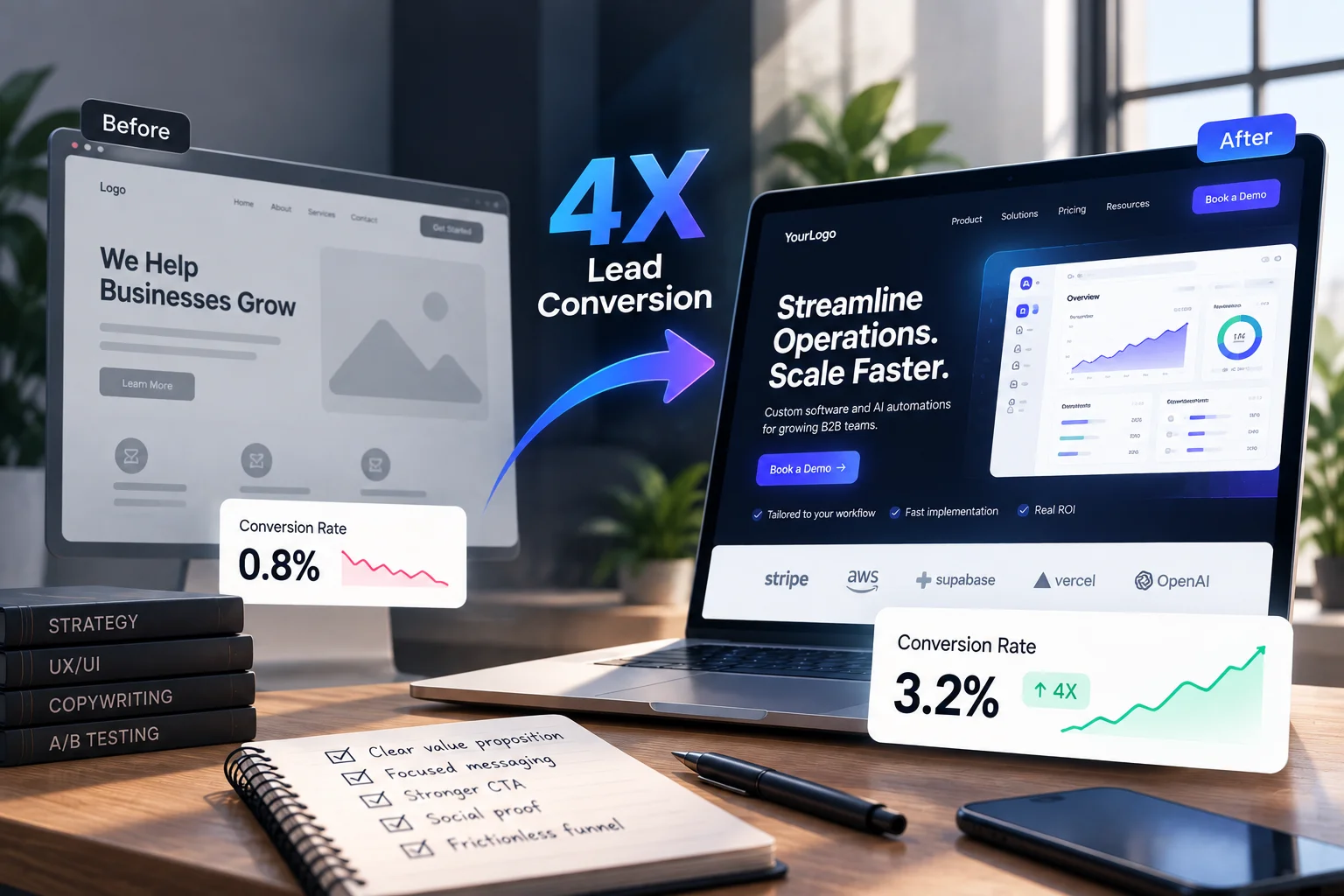
Paid and outbound traffic was landing exactly where it should — on a dedicated page built for the campaign. The problem was what happened next: under 1% of visitors submitted the lead form, and nobody on the team could say with confidence why. This is the six-week rebuild that took it to a 4X conversion lift.
The challenge
The landing page looked polished and was getting qualified traffic, which made the low conversion rate more confusing, not less. Analytics tracked pageviews and form submits, but nothing in between — no visibility into where visitors actually dropped off, whether they scrolled past the fold, or how far they got into the form before abandoning.
Instrumenting the funnel honestly
The first move wasn’t a redesign — it was measurement. We rebuilt the analytics denominator from “form submits / total pageviews” to a staged funnel: scroll depth, CTA visibility, form-field engagement, and per-field abandonment. That reframing alone surfaced the real problem: over 70% of engaged visitors were abandoning at the fourth form field, and the page’s single hard CTA (“Book a Demo”) was asking for more commitment than a first-time visitor was ready to give.
What we rebuilt
- Page architecture. Cut the page to one hero, one outcome-led value statement, specific social proof, and a single above-the-fold CTA — removing the mid-page sections that gave visitors an exit before the ask.
- A softer first CTA. Replaced “Book a Demo” with a lower-commitment “See it in action” path for first-time visitors, with the harder conversion offered as a second step for those already convinced.
- Form simplification. Cut the lead form from seven fields to three — the ones the sales team actually used to qualify and route leads. Every dropped field had been correlated with a measurable completion drop and no corresponding value to the sales process.
- Specific social proof. Replaced a generic “trusted by 10,000+ teams” banner with three named, verifiable customer quotes tied to outcomes.
Each change shipped as a structured test against the existing page, run long enough to reach statistical confidence before rolling out to 100% of traffic.
The results
Over the six-week test window, lead conversion increased 4X and cost per lead dropped 42% on the same ad spend. Form completion rate for visitors who started filling it out rose 3.1 percentage points. The sales team also reported the leads coming through were better qualified, since the three retained fields were the ones they actually used to route and prioritize.
If your funnel is converting traffic you’re already paying for at under 1%, I run a structured funnel audit that usually surfaces the first fix within days. For the pattern library behind this rebuild, see why your landing page converts at 0.8% (and how to fix it).
MORE CASE STUDIES
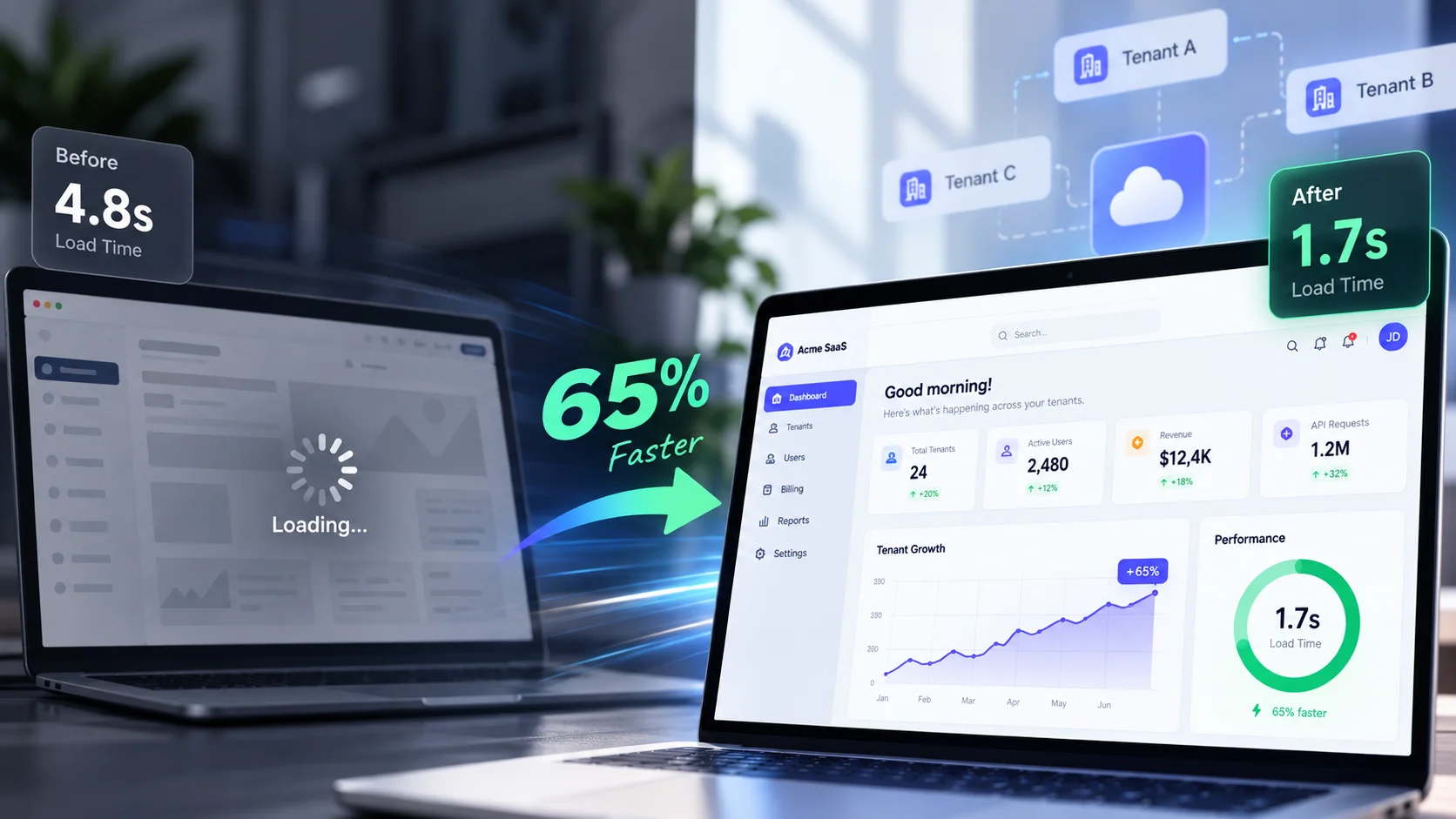
Cutting Load Time by 65% on a Multi-Tenant SaaS Platform
A growing SaaS platform was bleeding users on slow routes. We profiled the request path, rebuilt the rendering pipeline, introduced edge caching, and migrated heavy queries to read replicas — with no downtime.

Zero-Downtime Migration to Scalable Infrastructure
A platform hitting database limits during peak hours was migrated to a horizontally-scalable architecture with read replicas, queue-backed background jobs, and CDN-fronted assets — deployed with feature flags and gradual rollout.