
Infrastructure
Zero-Downtime Migration to Scalable Infrastructure
A platform hitting database limits during peak hours was migrated to a horizontally-scalable architecture with read replicas, queue-backed background jobs, and CDN-fronted assets — deployed with feature flags and gradual rollout.
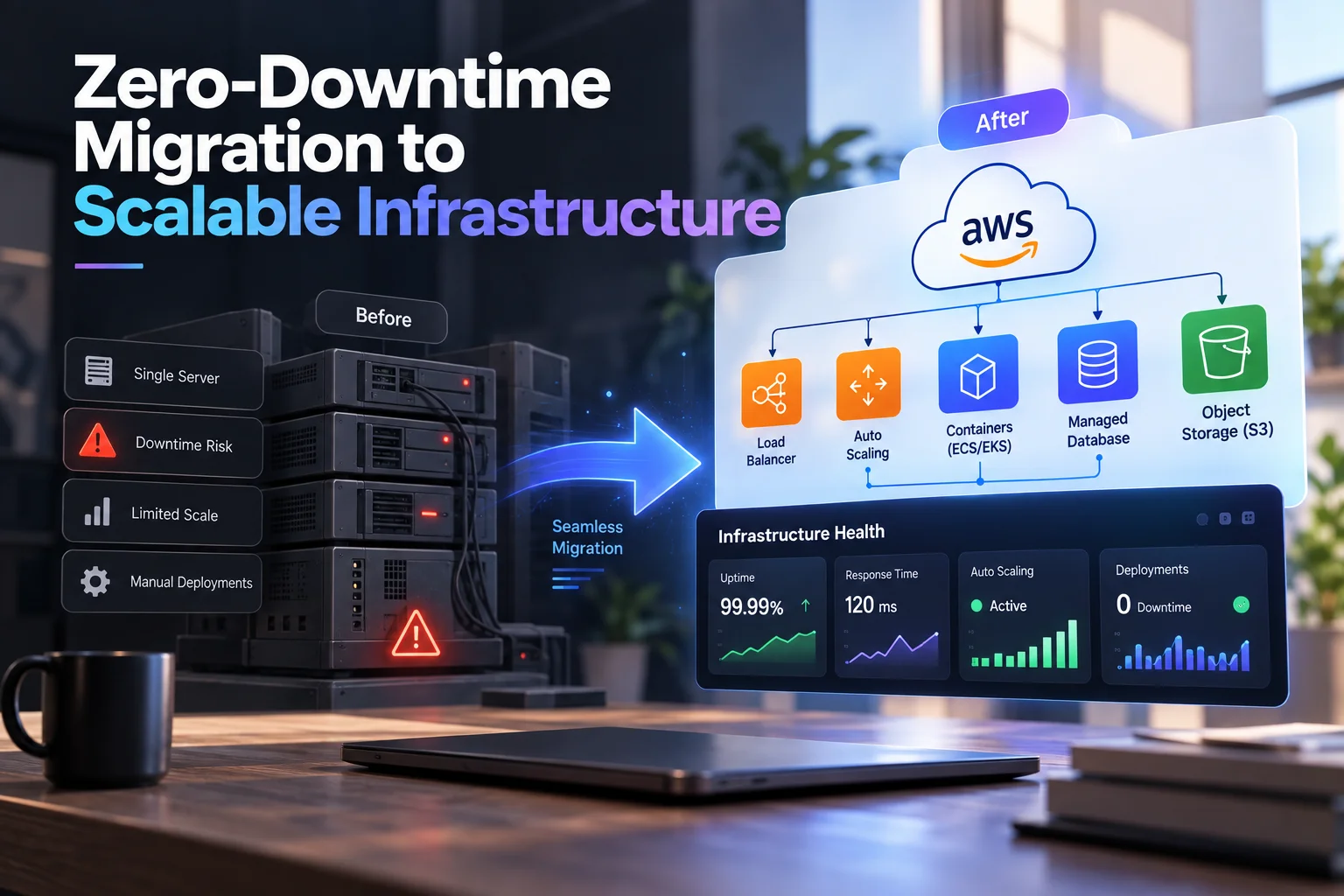
Growth is a good problem until it isn’t. This platform’s user base had tripled in under a year, and its single-primary database architecture — fine at launch — was now hitting connection limits and lock contention every day during peak hours. The team needed to scale the infrastructure without a maintenance window, because the business couldn’t afford one.
The challenge
Peak-hour traffic was saturating the primary database with a mix of transactional writes, heavy reporting queries, and background job polling all competing for the same connections. Manual operations work — restarting stuck jobs, manually rebalancing load, firefighting during traffic spikes — was consuming a growing share of the engineering team’s week. The constraint that shaped everything: no downtime, no data loss, and no big-bang cutover.
The migration approach
- Read replicas first. Reporting and analytics queries were moved to read replicas before anything else changed, immediately relieving pressure on the primary without touching the write path.
- Queue-backed background jobs. Polling-based background work was replaced with a proper job queue, decoupling job execution from request-time load and eliminating the periodic polling spikes that had been contributing to lock contention.
- CDN-fronted assets. Static and semi-static assets were moved in front of a CDN, cutting origin traffic and freeing application servers to handle only the requests that actually needed them.
- Horizontal scaling with feature flags. Each architectural change was deployed behind a feature flag and rolled out gradually — first to internal traffic, then a small percentage of production, then everyone — so any regression was caught on a small blast radius, not the whole user base.
Because every stage ran in parallel with the existing system before the cutover, there was no single moment where the migration could take the platform down. Traffic was shifted gradually, with the old path kept warm as a rollback option until the new path had proven itself under real peak load.
The results
The platform now holds 99.9% uptime through peak hours it previously struggled with, and supports 10X the concurrent users on the same core architecture. Manual operations work dropped 55% — the queue-backed jobs and read replica split removed most of the firefighting that used to eat into the team’s week. All of it shipped without a single maintenance window.
If your platform is starting to strain at peak hours, I can help you plan a migration path that scales without a risky cutover. For how this same discipline applies at the request-handling layer, see a pragmatic AWS setup for solo devs and small teams.
MORE CASE STUDIES
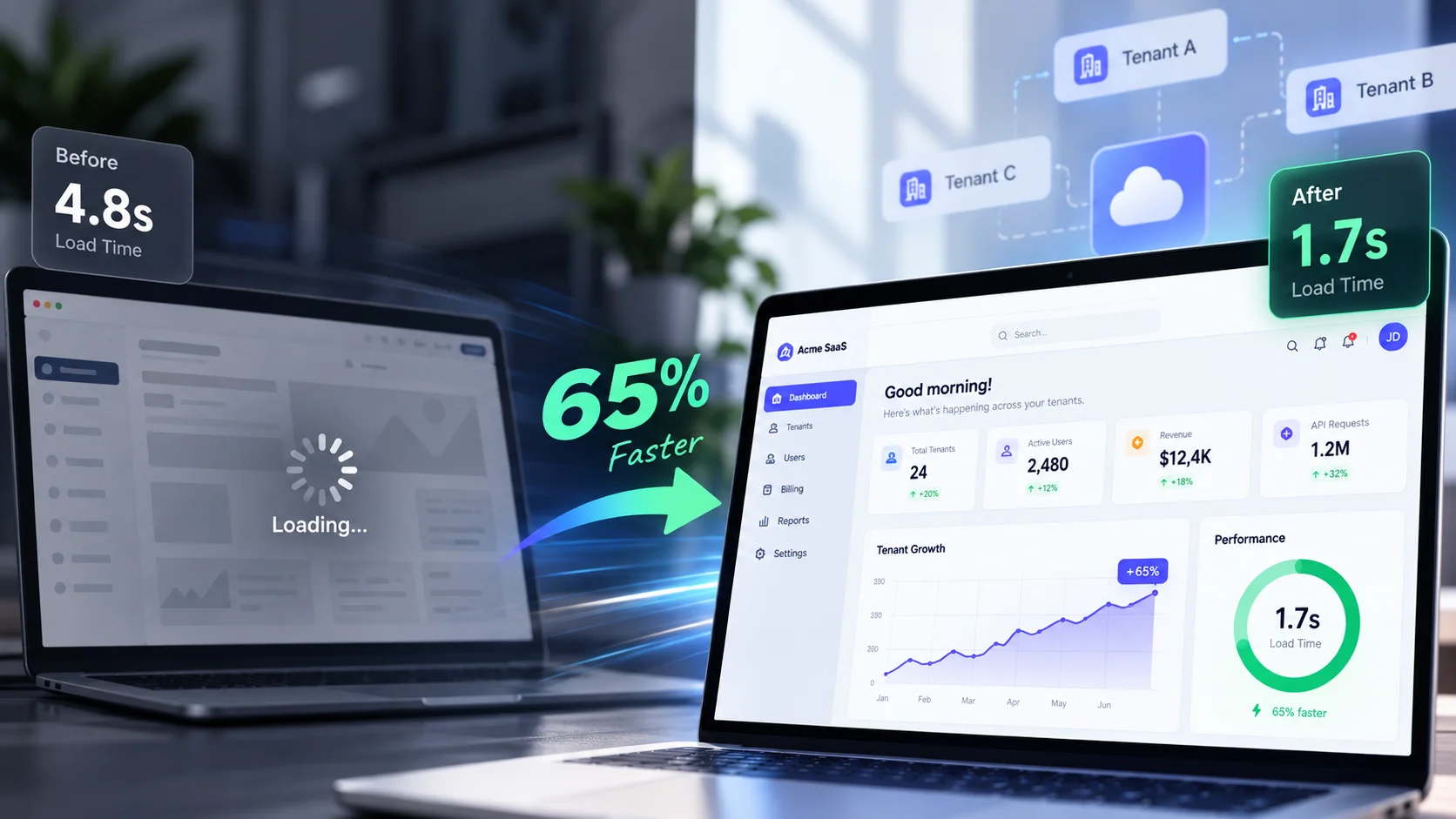
Cutting Load Time by 65% on a Multi-Tenant SaaS Platform
A growing SaaS platform was bleeding users on slow routes. We profiled the request path, rebuilt the rendering pipeline, introduced edge caching, and migrated heavy queries to read replicas — with no downtime.
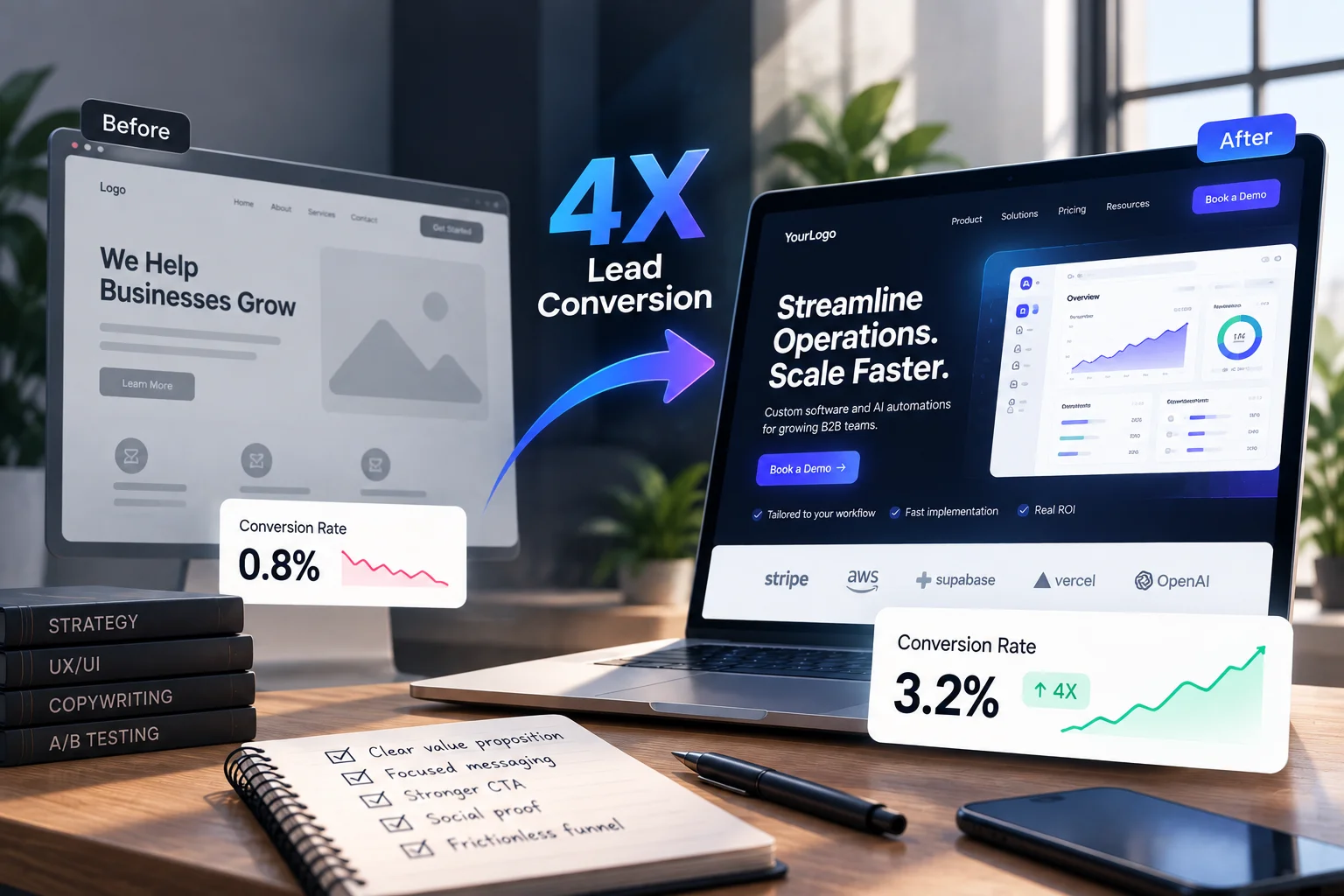
4X Lead Conversion: Rebuilding a B2B Landing Page Funnel
A B2B landing page was driving traffic but converting under 1%. We rebuilt the page architecture, simplified the lead form, instrumented the funnel end-to-end, and ran a structured test plan over six weeks.