
Logistics CRM
Freight Broker CRM: Running a Brokerage from Quote to Invoice
Freight brokerages juggle load boards, spreadsheets, email, and accounting tools. This custom CRM and lightweight TMS puts quotes, loads, carriers, billing, and margin reporting in one workspace, with exceptions shown before the shipper calls.
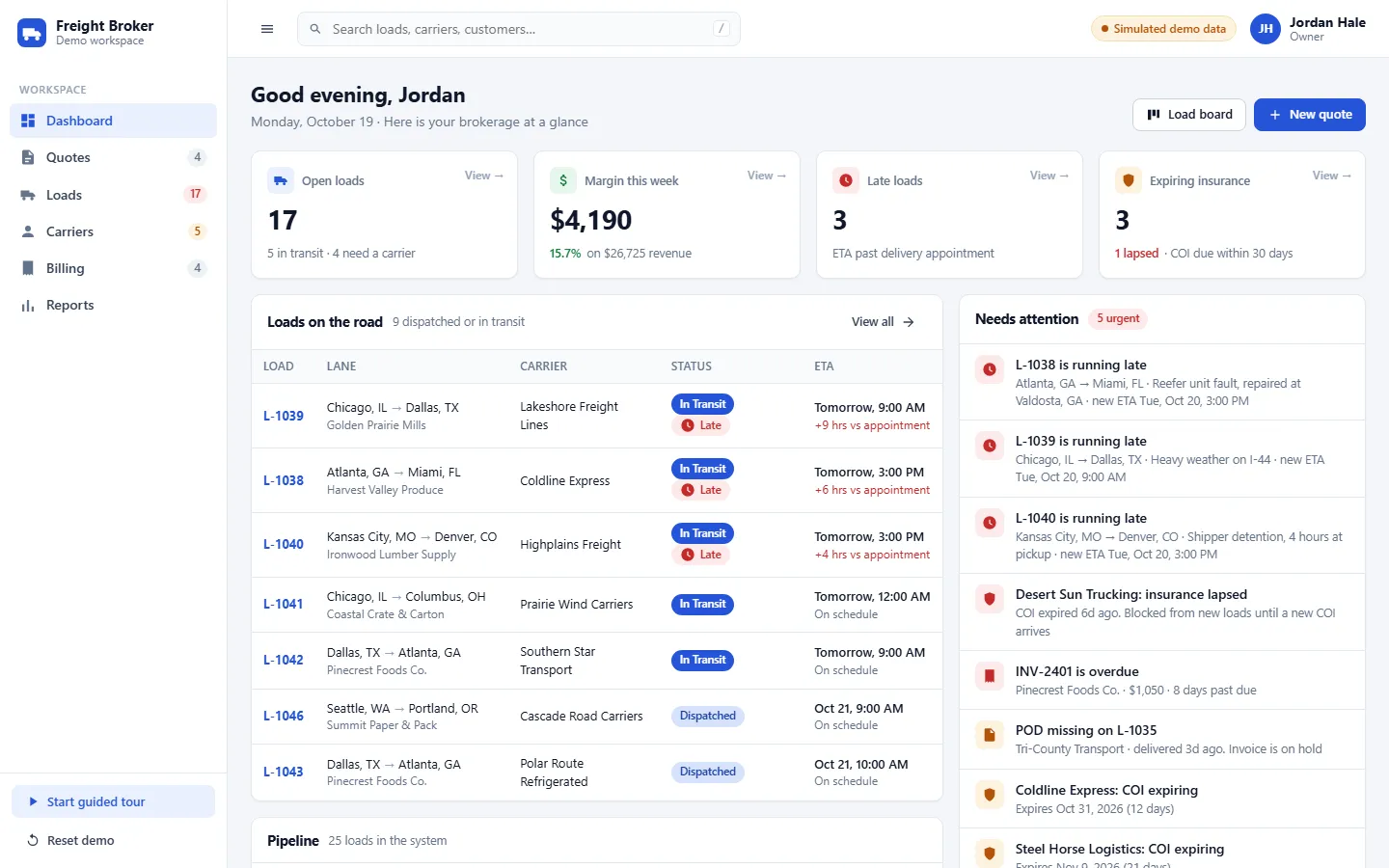
A small freight brokerage usually runs on four tools that don’t talk to each other: a load board, a spreadsheet, an inbox, and an accounting package. The problems show up at the worst moment. A late load is discovered when the shipper calls, a carrier’s insurance lapses unnoticed, and an invoice stalls because nobody chased the proof of delivery. I built this freight broker CRM to put the whole brokerage in one workspace, from quote to invoice.
The challenge
Generic CRMs don’t understand freight. They have no concept of lanes, carriers, check calls, appointments, or per-load margin. Enterprise TMS platforms do, but they are expensive and slow to adopt for a small or mid-sized brokerage. The gap was software that speaks the brokerage’s language without enterprise weight.
This is a demo product built with fictional companies, people, and rates. It shows the workflow design and the system I would build for a real brokerage.
The approach: every load, every stage, one pipeline
The core of the system is a load pipeline. Every load is tracked through quoted → booked → dispatched → in transit → delivered → invoiced, and each record shows lane, carrier, status, and ETA against the appointment. Exceptions don’t wait to be found. A “Needs attention” feed brings them to the top of the dashboard.
- Quotes. Create and track rate quotes, then convert accepted quotes into booked loads in one step.
- Check calls and late-load alerts. Log check calls and delays. Loads that pass their delivery appointment are flagged automatically.
- Carrier compliance. COI expiry is tracked per carrier, with warnings before renewal. Lapsed carriers are blocked from new loads, so compliance risk is enforced by the system instead of relying on someone’s memory.
- POD-gated billing. Shipper invoices are held until the proof of delivery is received, and overdue invoices are flagged.
- Reports. Weekly margin and revenue, open loads, and carrier performance.
The product is a single-page app with a role-based workspace, alerting rules, a guided product tour, and resettable demo data, so prospects can explore it freely.
The outcome
Late loads, lapsed insurance, and missing PODs all appear on one screen. Margin is visible per load and per week, not at month-end. The data model is a clean base for the integrations a real brokerage needs next, such as load boards, ELD tracking, and accounting sync.
You can try the freight broker CRM demo. If your brokerage or logistics team has outgrown spreadsheets but doesn’t need an enterprise TMS, I can build a CRM around your workflow.
MORE CASE STUDIES
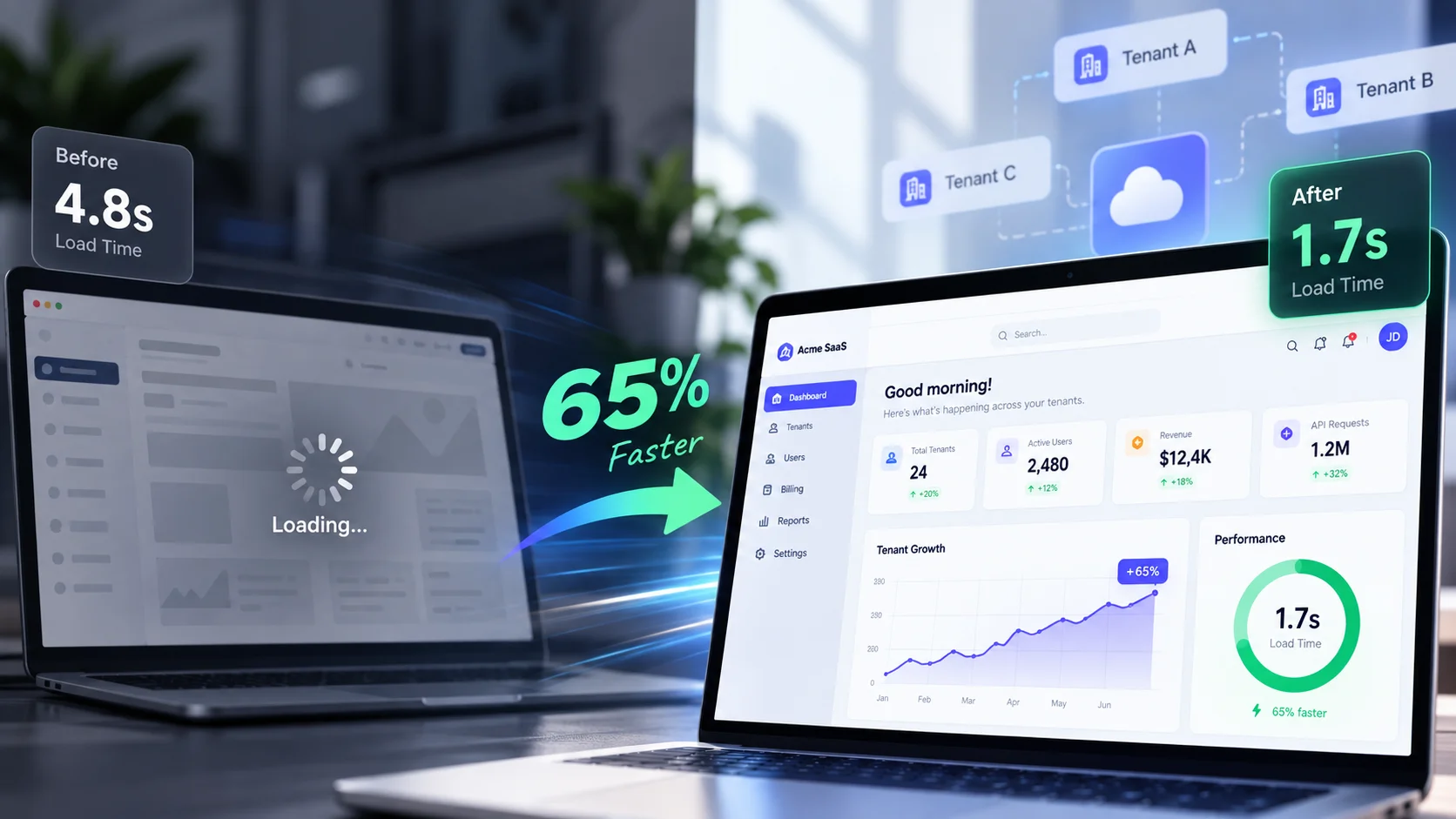
Cutting Load Time by 65% on a Multi-Tenant SaaS Platform
A growing SaaS platform was bleeding users on slow routes. We profiled the request path, rebuilt the rendering pipeline, introduced edge caching, and migrated heavy queries to read replicas — with no downtime.
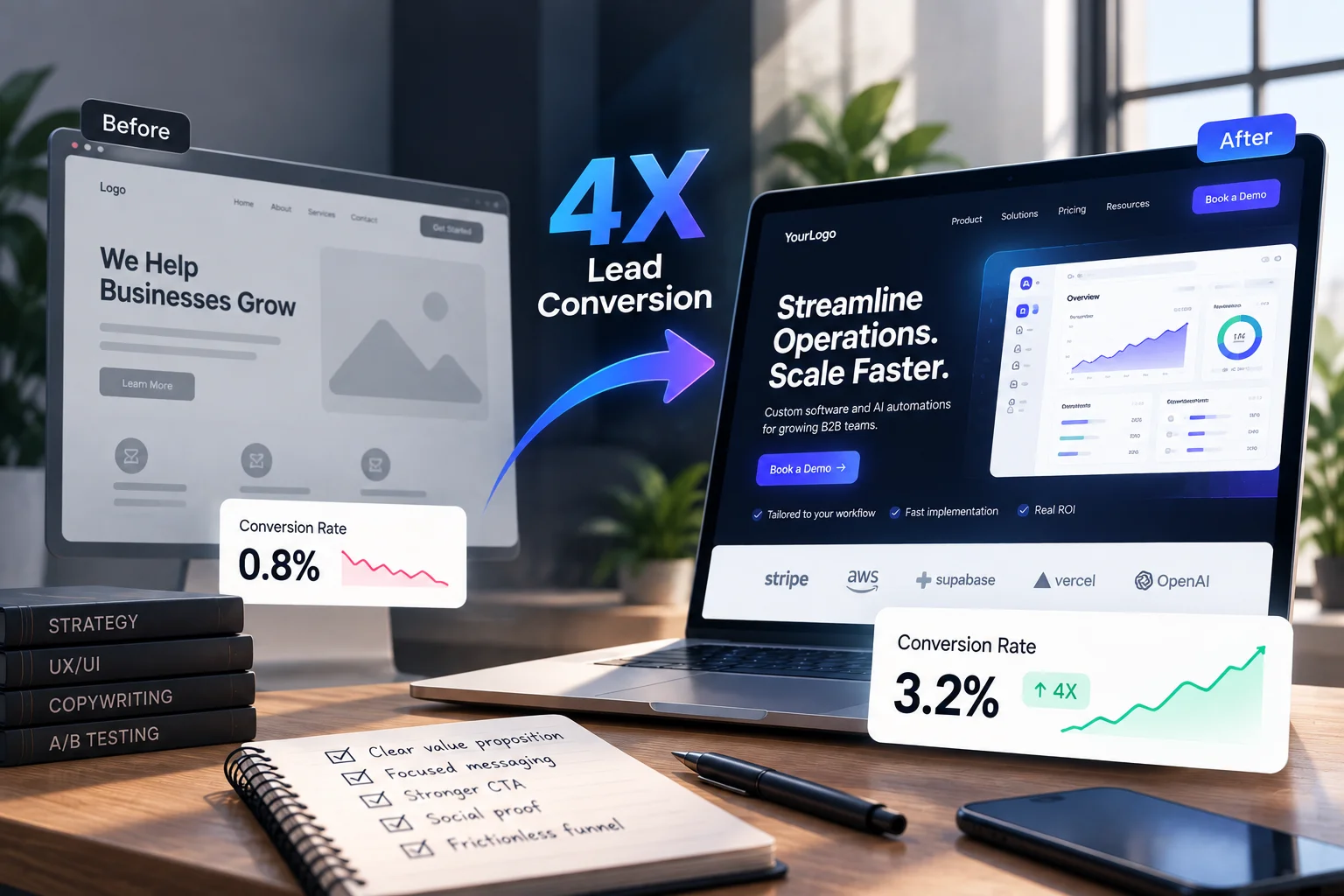
4X Lead Conversion: Rebuilding a B2B Landing Page Funnel
A B2B landing page was driving traffic but converting under 1%. We rebuilt the page architecture, simplified the lead form, instrumented the funnel end-to-end, and ran a structured test plan over six weeks.
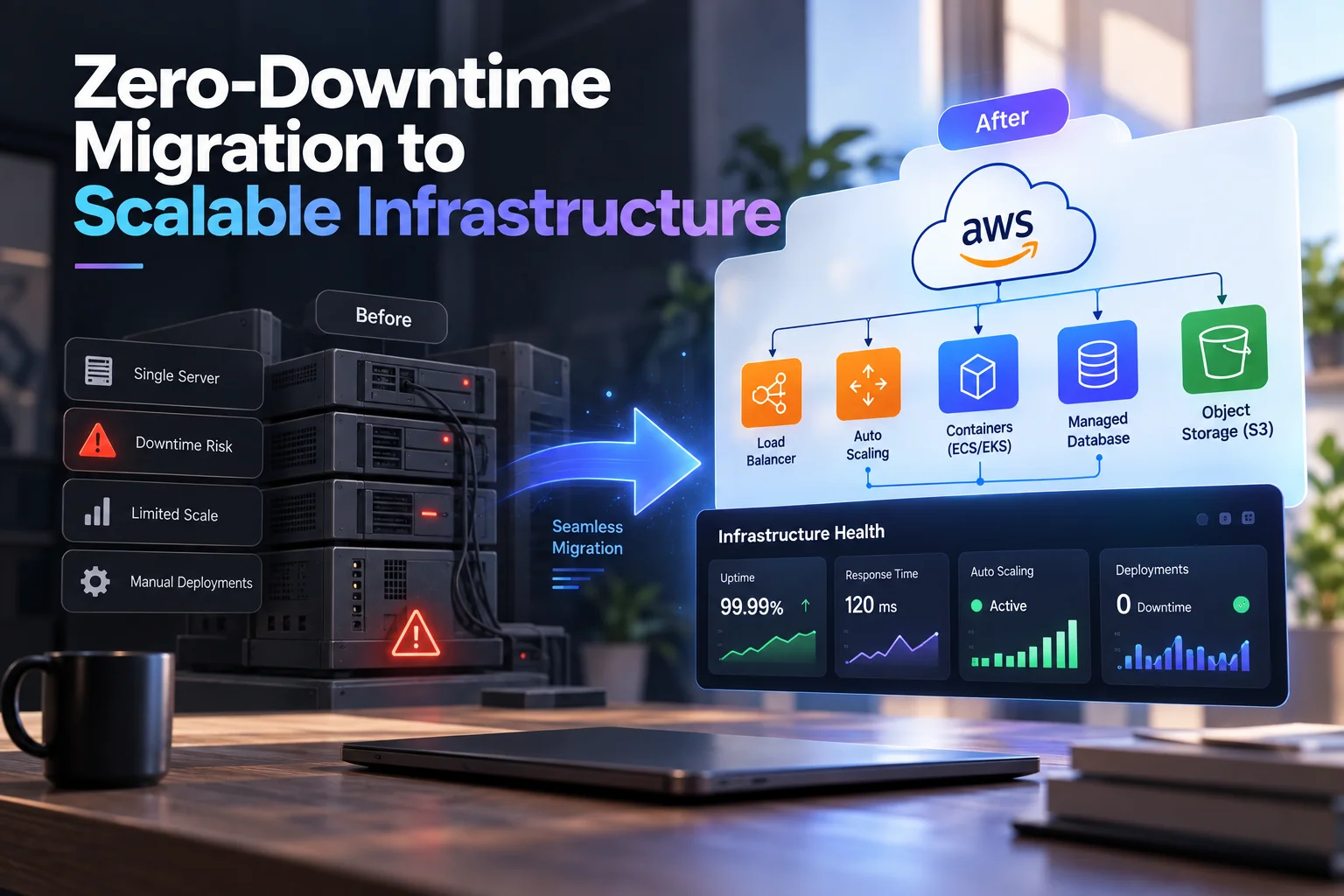
Zero-Downtime Migration to Scalable Infrastructure
A platform hitting database limits during peak hours was migrated to a horizontally-scalable architecture with read replicas, queue-backed background jobs, and CDN-fronted assets — deployed with feature flags and gradual rollout.
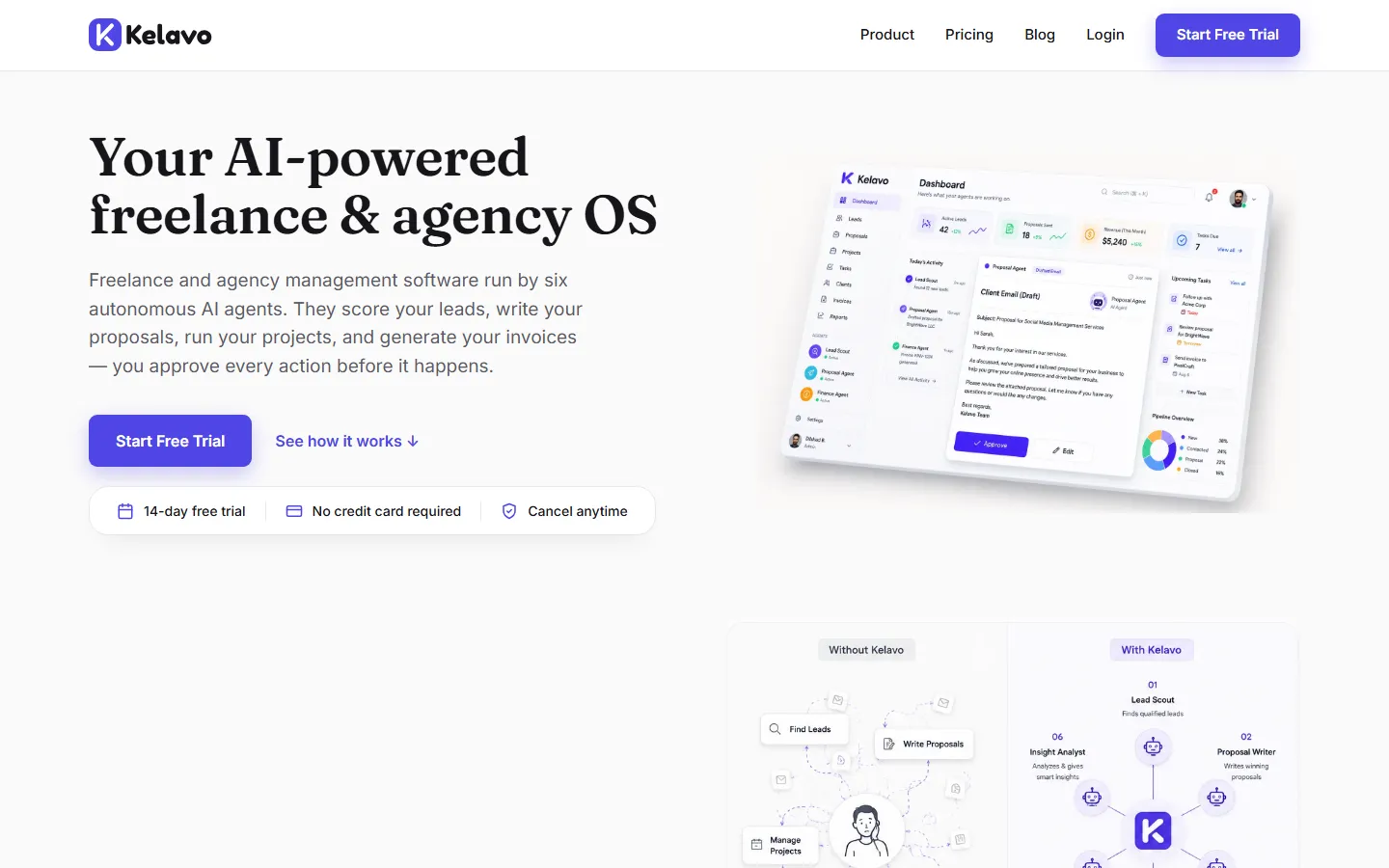
Kelavo: Building an AI Automation SaaS for Freelancers & Agencies
Freelancers and small agencies lose hours to non-billable admin. I built Kelavo, a subscription SaaS where six specialised AI agents handle the client lifecycle from lead to invoice, and the owner approves every action before it goes out.
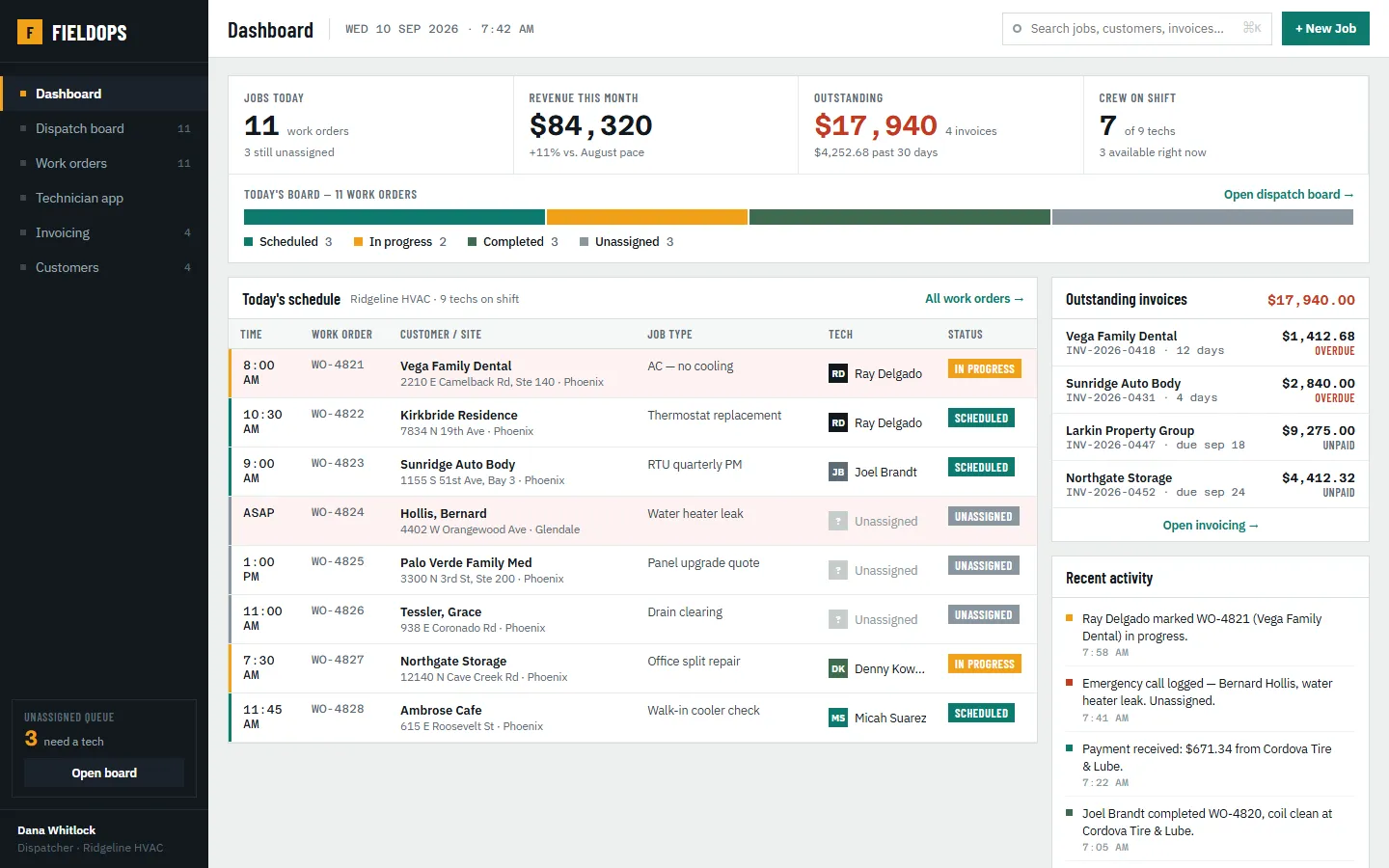
FieldOps: Field Service Management Software for HVAC, Plumbing & Electrical
Trades businesses still run on phone calls, whiteboards, and paper job sheets. FieldOps tracks every job from the first call to the final invoice: a dispatch board for the office, a mobile app for technicians, and live revenue for the owner.